Chapter 9: Growth Hormone Pathways and Recovery
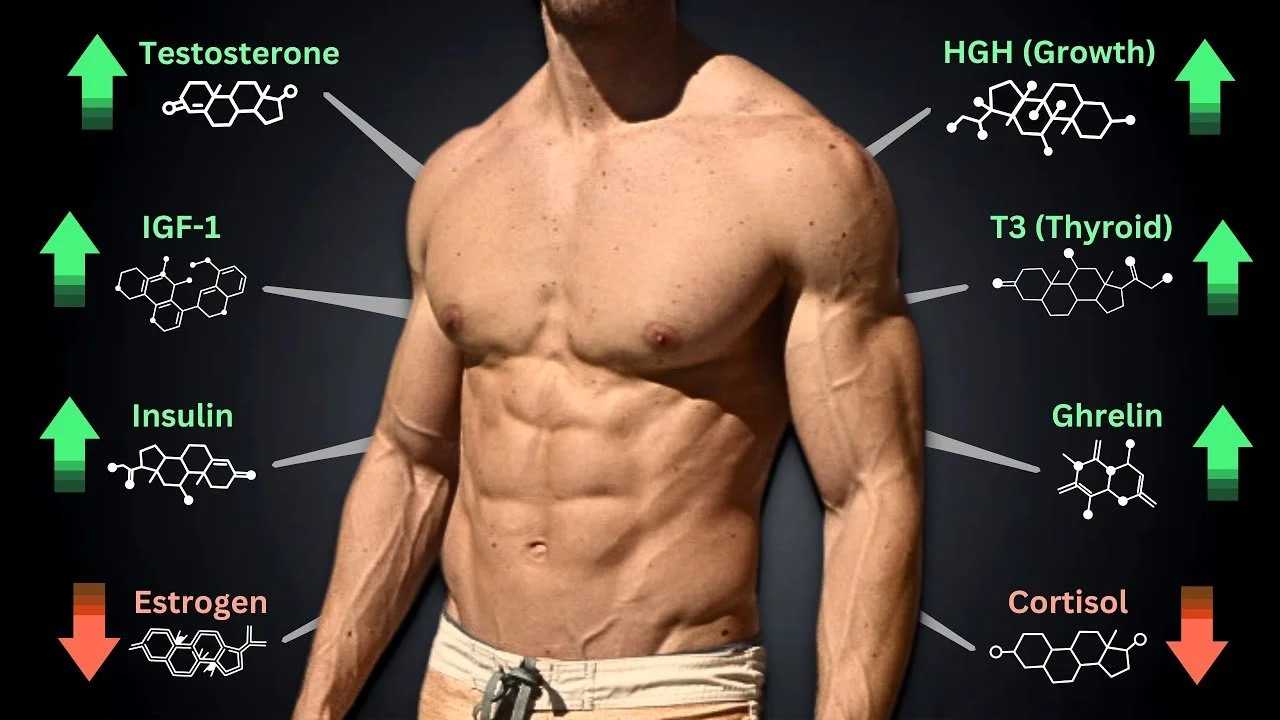
HGH pic
Human growth hormone (GH), also known as somatotropin, plays a fundamental role in tissue repair, muscle maintenance, fat metabolism, skin elasticity, bone density, and overall recovery capacity.
Secreted primarily by the pituitary gland in pulsatile bursts, particularly during deep sleep, GH levels are highest during childhood and adolescence, supporting rapid growth and development. After age 30,
natural GH production declines steadily — often by 10–15% per decade — contributing to many visible and functional aspects of aging.
This decline has made growth hormone pathways one of the most actively researched and discussed areas in longevity science, with specific peptides designed to stimulate the body’s own GH production rather than replacing the hormone directly.
The Biology of Growth Hormone and Aging
Growth hormone exerts many of its effects indirectly through insulin-like growth factor-1 (IGF-1), produced primarily in the liver. Together, GH and IGF-1 promote:
Protein synthesis and muscle hypertrophy
Lipolysis (fat breakdown) and improved body composition
Collagen synthesis for skin, tendons, and ligaments
Bone remodeling and density maintenance
Immune system modulation
Faster recovery from physical stress or injury
As GH secretion decreases with age, individuals often experience sarcopenia (muscle loss), increased body fat (especially visceral fat), slower healing, reduced skin elasticity, lower energy, and diminished exercise recovery capacity. Sleep quality also declines, creating a vicious cycle since deep sleep is when the majority of GH is released.
Peptide Secretagogues vs Direct Hormone Replacement
Rather than using exogenous (synthetic) growth hormone — which comes with significant regulatory restrictions, higher side effect risks, and potential suppression of natural production — many researchers and clinicians prefer growth hormone secretagogues (GHS). These peptides stimulate the pituitary gland to release more of the body’s own GH in a more physiological, pulsatile pattern.
Among the most commonly discussed peptides in this category are:
CJC-1295 (with or without DAC): A growth hormone-releasing hormone (GHRH) analog that extends the duration of GH release.
Ipamorelin: A selective ghrelin receptor agonist that produces a clean GH pulse with minimal impact on cortisol or prolactin.
Tesamorelin: Approved for reducing visceral fat in HIV-associated lipodystrophy and studied for metabolic benefits in aging populations.
Sermorelin: An earlier-generation GHRH analog still used in some anti-aging protocols.
GHRP-2 and GHRP-6: Ghrelin mimetics that strongly stimulate GH release, often stacked with GHRH analogs.
These peptides work synergistically with the body’s natural feedback mechanisms, potentially preserving more youthful GH patterns while reducing some risks associated with direct GH administration.
Applications in Recovery and Longevity
In sports performance and longevity communities, GH secretagogues are frequently explored for:
Accelerated recovery from intense training or injuries
Preservation of lean muscle mass during aging or calorie restriction
Improved body composition (reduced fat, maintained muscle)
Enhanced sleep quality and deep sleep duration
Faster healing of soft tissues, tendons, and joints
Support for skin elasticity and wound healing
Many middle-aged users report better training adaptations, reduced soreness, improved energy, and faster return to baseline after physical stress when using these compounds alongside proper training and nutrition. Athletes sometimes incorporate them during rehabilitation periods or heavy training blocks.
Risks, Side Effects, and Important Considerations
Despite their popularity, growth hormone pathway interventions require careful management. Potential side effects include:
Water retention and joint discomfort
Temporary insulin resistance or elevated blood glucose
Carpal tunnel-like symptoms
Increased appetite (with certain GHRPs)
Theoretical long-term risks that are still being studied
Because these peptides elevate IGF-1, individuals with a history of cancer must exercise particular caution, as IGF-1 can promote cell proliferation. Regular medical monitoring (IGF-1 levels, fasting glucose, HbA1c, PSA, and other relevant markers) is strongly recommended. These compounds are strictly regulated in many countries and are often available only through compounding pharmacies or specific medical channels.
Integration with Lifestyle Practices
Peptides targeting growth hormone pathways work best as enhancers, not replacements, for foundational habits:
Resistance training (especially heavy compound lifts) naturally boosts GH release.
High-quality deep sleep (7–9 hours) is essential for natural GH pulses.
Adequate protein intake (particularly leucine-rich sources) supports muscle protein synthesis.
Strategic fasting or caloric cycling can amplify GH secretion.
Stress management prevents cortisol from blunting GH effects.
When these lifestyle elements are optimized first, the marginal benefits of peptides tend to be more noticeable and sustainable.
Ethical and Regulatory Landscape
The use of GH secretagogues occupies a complex regulatory space. While some (like Tesamorelin) have specific medical approvals, most are used off-label or in investigational contexts for longevity and performance. Sports organizations (WADA, IOC) prohibit them for competitive athletes. Ethical discussions center on the line between therapeutic restoration and performance enhancement, especially as populations age and demand for vitality-preserving interventions grows.
The Future of Growth Hormone Pathway Research
Advances in peptide engineering are producing longer-acting, more selective compounds with improved safety profiles. Researchers are exploring combinations with other peptides (e.g., recovery peptides like BPC-157) and integrating them with advanced diagnostics for truly personalized protocols. Some envision a future where GH pathway optimization becomes a standard component of preventative aging medicine, helping maintain muscle, metabolism, and recovery capacity deep into later decades.
Conclusion
Growth hormone pathways represent a powerful lever in the pursuit of extended healthspan. While natural decline is inevitable, strategic support through lifestyle practices and targeted peptides offers meaningful potential for preserving vitality, recovery capacity, and physical function.
As with all advanced interventions, responsible use — grounded in medical supervision, realistic expectations, and strong foundational habits — remains essential. The goal is not to return to adolescent hormone levels, but to support healthier, more resilient aging patterns that allow people to remain strong, active, and independent for as long as possible.